
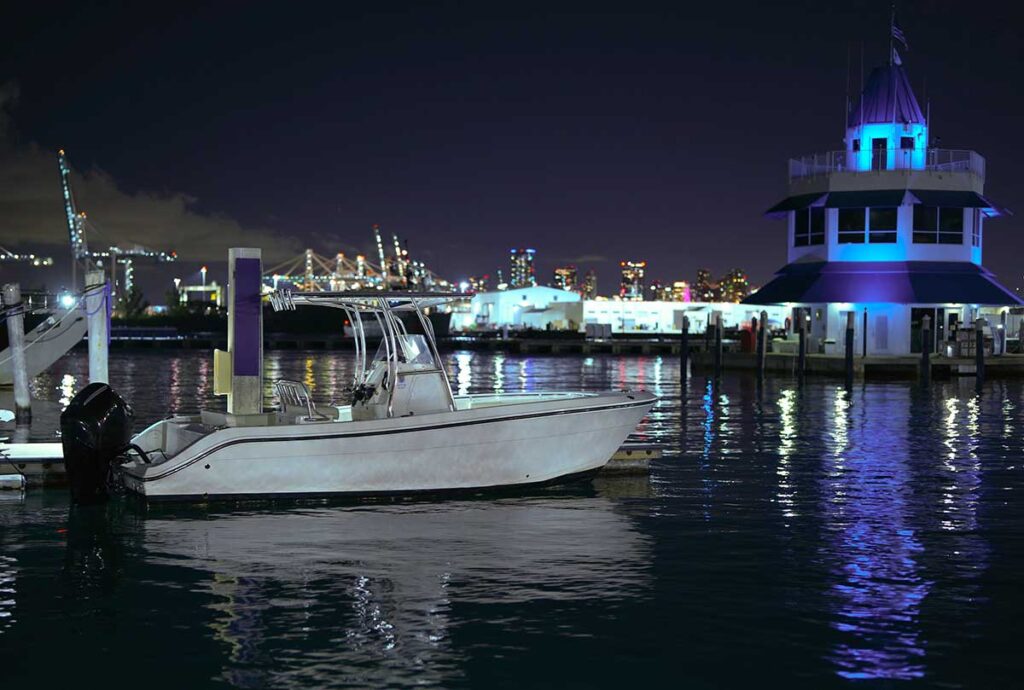
There is something special about boating at night. Whether it’s the stunning sunsets, the skyline shimming in the distance, or the wide-open sky with more stars than can ever be seen from land, there is something extraordinary about boating at night. But nighttime boating also brings about a whole new variety of complications that can turn a relaxing evening into a dangerous situation if you’re not prepared.
Over the years, I’ve seen plenty of boaters make the same mistakes when the sun goes down. Some of these errors are minor inconveniences, but they can lead to serious accidents. The good news is that most nighttime boating problems are completely avoidable once you know what to watch out for.
The biggest trap most people fall into is thinking night boating is just like day boating, only darker. It’s not. The way we perceive our environment completely changes when the sun goes down: depth perception, speed judgment, and even how we spot other boats are all adversely affected. Below are some of the most common ways boaters get into trouble at night.
Inadequate Lighting
This one seems simple, but it’s often easy to overlook because you spend most of your boating time during daylight hours. It’s often easy not to realize you have a lighting problem until darkness falls, and then you’re committed to go on the water – lights be dammed.
So first up is improper or no navigation lights. Sounds basic, right? Yet every season, you hear about boats getting pulled over or, much worse, serious accidents caused by boats that were difficult to identify on the water at night.
Your navigation lights aren’t just decorative; they are required by law and serve an important safety function. Red and green sidelights, a white stern light, and a white masthead light (for vessels over a certain length) help other boaters determine your position, direction, and type of vessel.
Dim bulbs, broken lenses, or lights blocked by gear should be taken seriously and dealt with immediately. Check every single light before you leave the dock. Carry spare bulbs. Make sure your lights are visible from the required distances and that lights are not just technically working, but actually bright enough to be seen by other boaters.
Also consider lighting inside your boat. White cabin or console lights will destroy your night vision and make it much harder to see other boats and obstacles. Use red lights in the cockpit area instead. They provide enough illumination to see what you’re doing without ruining your ability to spot obstacles or other vessels.
Misjudging Distances
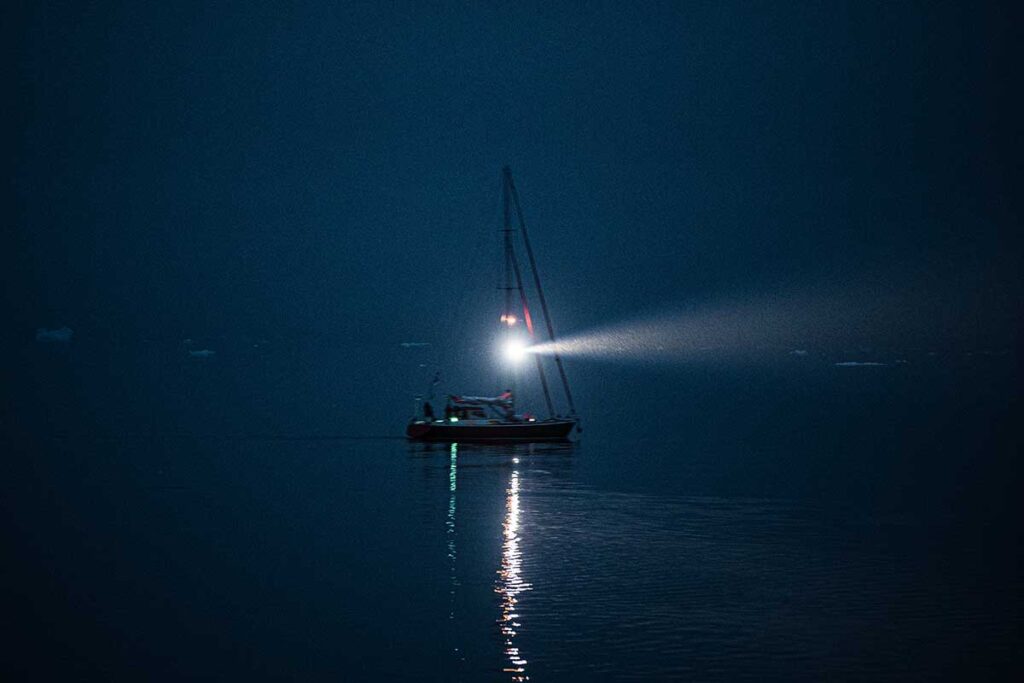
Despite your local knowledge, be aware that everything looks different at night. That channel marker you can easily spot from half a mile away during the day becomes nearly invisible after dark, even if it’s lit. Distances become deceptive, and depth perception disappears.
I learned this lesson the hard way when I nearly ran aground on a sandbar I’d cleared dozens of times in daylight. At night, I completely misjudged how far I was from the marker. Now I always reduce my speed significantly after dark and rely strongly on my depth finder and GPS. If you don’t have these tools, you shouldn’t be doing serious nighttime navigation.
The water itself can be misleading, too. What looks like open water might be full of debris, logs, or other hazards you’d easily avoid during the day. Slow down. Give yourself twice the reaction time you think you need.
Another lesson learned was that radar is almost essential in busy waterways. One night, while returning from an offshore fishing trip, the waterway seemed completely empty, yet the radar showed 2 very small blips. I came off a plane and soon noticed 2 kayakers, without any lights whatsoever, directly in my path. After that night, I decided it was too dangerous to operate in urban areas at night without radar assistance.
Overconfidence
Just because you’ve traversed a particular waterway a hundred times doesn’t mean you should treat it casually at night. Navigational aids can be out, buoys can drift, and temporary hazards appear without warning.
A friend of mine ran into a partially submerged log in waters he knew like the back of his hand. He was going too fast because he felt comfortable, and the impact damaged his lower unit. Familiarity can breed complacency, and complacency at night can be costly.
Poor Planning and Communication
Heading out at night without filing a float plan is asking for trouble. Someone on shore should know where you’re going, what route you’re taking, and when you expect to return. If something goes wrong, this information becomes critical for rescue operations.
Similarly, make sure your VHF radio is working, and you know how to use it. Your cell phone might not have coverage out on the water, and even if it does, the Coast Guard monitors VHF Channel 16, not your cellular network.
Ignoring Weather Conditions
Weather can deteriorate quickly after dark, and you won’t see storm clouds building on the horizon the way you would during the day. Check the marine forecast before you leave, and pay attention to changing conditions. An unexpected squall at night is far more dangerous than the same weather event in daylight – and much more frightening.
Wind, fog, and rain all become more challenging to deal with when visibility is already limited. If conditions start to worsen, head back. No night cruise is worth risking your safety.
The Bottom Line
Nighttime boating can be loads of fun, but it demands respect and preparation. The boaters who get into trouble are usually the ones who treat it like daytime boating with less visibility. It’s a completely different activity with its own risks and requirements.
Take your time, maintain your equipment, stay alert, and never let routine make you careless. The water doesn’t care how experienced you are or how many times you’ve made the same trip. Every trip demands your full attention, especially when the sun goes down.

